The Complete Guide to Microservices Architecture
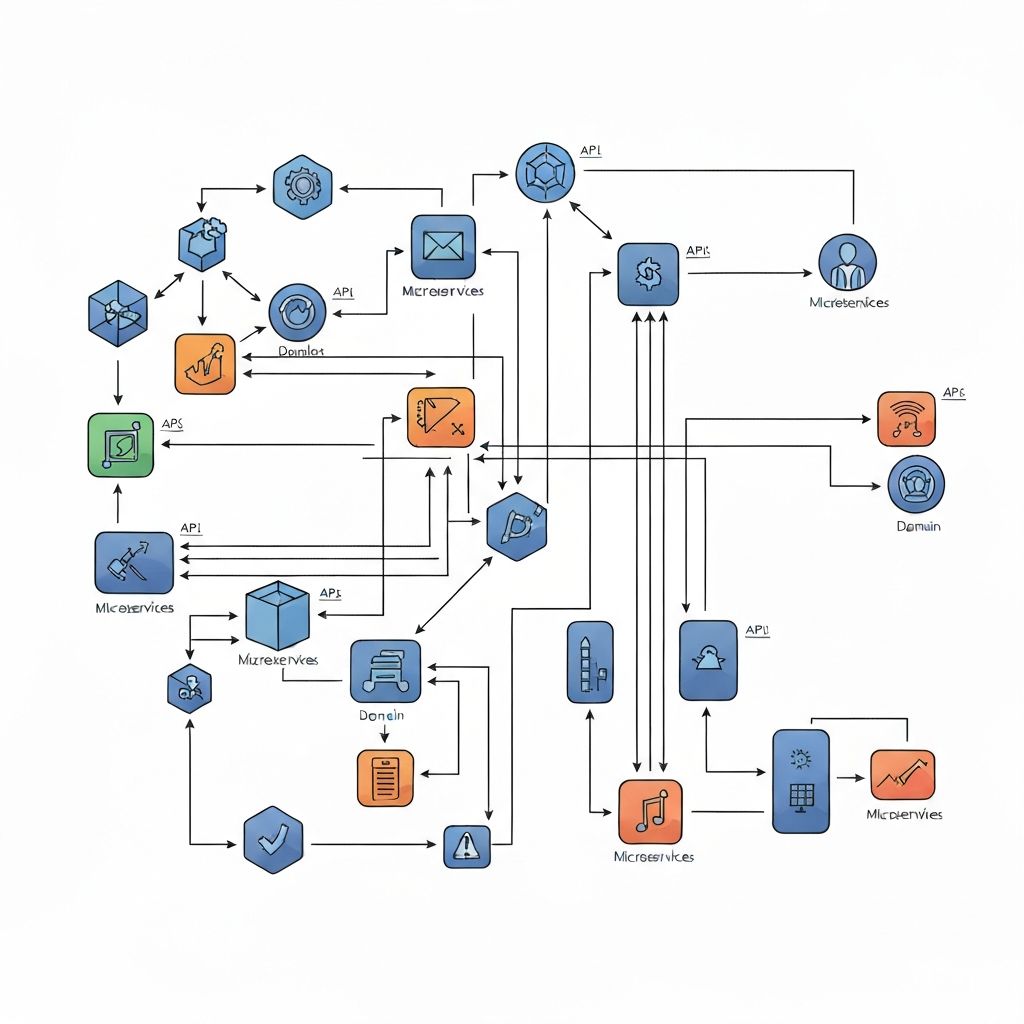
Microservices architecture has become the standard for building scalable, maintainable enterprise applications. This architectural style structures an application as a collection of loosely coupled services, each implementing specific business capabilities.
What are Microservices?
Microservices break down monolithic applications into small, independent services that communicate via APIs. Each service is independently deployable, scalable, maintainable, organized around business capabilities, and owned by a small team.
Benefits of Microservices
- **Scalability**: Scale individual services based on demand
- **Technology Flexibility**: Use the best technology for each service
- **Faster Development**: Teams work independently without blocking each other
- **Resilience**: Failures in one service don't bring down the entire system
- **Easier Maintenance**: Small codebases are easier to understand and modify
When to Use Microservices
Microservices aren't always the right choice. Consider them for large, complex applications with multiple teams, applications requiring different scalability for different features, organizations with mature DevOps practices, and systems needing frequent updates and deployments.
Design Principles
Follow domain-driven design to identify service boundaries. Ensure each service has a single responsibility, maintains its own database, communicates via well-defined APIs, and can be deployed independently. Design for failure from the start.
Communication Patterns
Services communicate through synchronous REST/gRPC APIs for immediate responses, asynchronous message queues for decoupled processing, and event-driven architecture for real-time data propagation. Choose the right pattern for each use case.
Data Management
Each microservice should own its database (database per service pattern). This ensures loose coupling but introduces challenges in maintaining data consistency. Use saga patterns for distributed transactions and event sourcing for audit trails.
Deployment and Operations
Containerization with Docker and orchestration with Kubernetes are essential. Implement service mesh (Istio, Linkerd) for service-to-service communication, comprehensive monitoring and logging, distributed tracing, and automated deployment pipelines.
Common Challenges
Microservices introduce complexity including distributed system challenges, network latency and failures, data consistency issues, increased operational overhead, and the need for sophisticated monitoring. Plan for these from the beginning.
Security Considerations
Implement API gateway for centralized authentication, service-to-service authentication, encrypted communication (mTLS), fine-grained authorization, and regular security audits. Security becomes more complex in distributed systems.
Migration Strategy
Don't try to migrate everything at once. Start by identifying bounded contexts, extract services incrementally, use the strangler pattern, maintain both systems during transition, and train teams on new practices.
Velorb's Microservices Expertise
We've architected and implemented microservices solutions for Fortune 500 companies. Our services include architecture consulting, migration from monolith to microservices, Kubernetes implementation and management, and developer training programs.
Ready to Transform Your Business?
Get expert consultation on how to implement these technologies in your organization. Our team is ready to help you succeed.